9+ curated guides • Updated September 2025
Look past the red carpets and blockbuster roles, and you'll find a hidden pattern connecting some of Hollywood's most beloved stars. It's the 'Number 6'—a numerological signature for the ultimate nurturer, and it secretly explains why we're so drawn to their magnetic, compassionate energy. This isn't coincidence; it's a cosmic code. In the universe of fame, where personas are manufactured and images are meticulously controlled, the Life Path 6 celebrity operates from a different frequency. They are the cosmic parents, the community builders, and the keepers of heart in an industry that often seems to have none. Understanding this vibrational signature is the key to decoding why certain stars feel less like distant idols and more like trusted confidants.
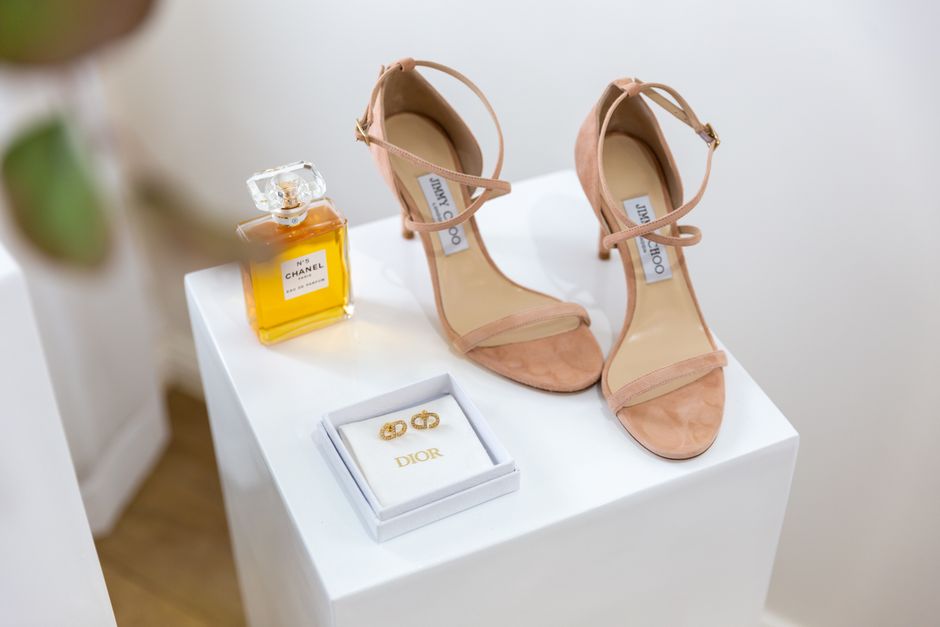
You've seen the design everywhere: a delicate stud in the front, with a larger, more dramatic element peeking out from behind the lobe. This 'ear jacket' style has become so common it feels anonymous, a trend without an origin. But it wasn't a trend that evolved organically; it was an earthquake caused by a single, iconic design that permanently changed the silhouette of the modern earring. This article deconstructs the Dior Tribales earring not as a fleeting fashion statement, but as a pivotal piece of industrial design. We will argue that its two-part construction was less an accessory and more of an invention—a new architectural blueprint for ear adornment. Its legacy isn't just in the countless imitations it spawned, but in the way it fundamentally altered our perception of what an earring could be, proving that the most profound revolutions often hide in plain sight.
Forget the rigid, boxy briefcase of your father's generation. That icon of corner-office conformity is gathering dust, replaced by a more versatile and intelligent successor. The modern man's ambition and style are no longer carried by a handle, but slung across the shoulder, signaling a new era of professional power. This isn't merely a change in accessory preference; it's a profound semiotic shift. The messenger bag is a declaration of independence from the static, top-down hierarchies of the past. It speaks of agility, of a professional life that bleeds into the personal, and of a power that is fluid, creative, and constantly in motion. It is the chosen vessel for the man whose office is not a room, but a network.
Remember the whiplash of 2022's handbag trends? We saw impossibly tiny bags that held nothing alongside giant totes that carried everything. This wasn't a fashion fluke; it was a societal tell. These purses were the physical manifestation of our conflicting desires for both frivolous freedom and over-prepared security in a post-pandemic world. As we stepped blinking into the light of a reopened society, our choice of bag became a non-verbal declaration of our internal state. It was a sartorial symptom of a culture grappling with newfound liberty while still bearing the scars of profound uncertainty. This article deconstructs these trends not as fleeting styles, but as crucial artifacts that tell the story of who we were, and who we wanted to be, in that singular, strange year.
Remember 2022? It was the year we tentatively stepped back into the world, blinking in the sunlight after years of virtual meetings. The accessories men chose weren't just about style; they were statements of intent, a quiet armor for our grand re-entry. We'll explore the key pieces that defined the year and uncover what they truly said about our hopes, anxieties, and the men we wanted to become again.
Celebrity Cruises doesn't just call the Edge a ship; they call it a 'resort that travels.' It’s a bold claim that promises the ambiance of a St. Regis with the views of the open ocean. But can a vessel designed for thousands truly replicate the bespoke, spacious feel of a five-star property on land? We stepped aboard to deconstruct the marketing and uncover if this is a genuine evolution in travel, or just a very beautiful cruise ship. The distinction is crucial. A resort is a destination in itself, defined by a sense of place, unhurried luxury, and intuitive service. A ship is a mode of transport, however grand. Our investigation focused on three core pillars that define any true luxury property: architectural intent, spatial flow, and the human element of service. The results were, to say the least, illuminating.
You think you know the Dairy Queen menu, but you probably only know half of it. For millions of Americans, the DQ experience isn't just Blizzards and Dilly Bars—it's steak finger baskets, breakfast tacos, and the Hungr-Buster burger. This isn't a secret menu; it's a massive, official divide that has created two entirely different Dairy Queen universes within the same country. This phenomenon, which I call 'The Blizzard Line,' serves as a culinary Mason-Dixon Line, separating two distinct fast-food cultures operating under the same iconic red logo. Cross this invisible border, and the familiar landscape of soft-serve and GrillBurgers gives way to a territory defined by crispy steak fingers and savory country gravy—a testament to the power of regional identity in an era of corporate homogenization.
You've been taught to match your bindi to your lehenga, but what if its true power has nothing to do with color? We're reframing the bindi not as an accessory, but as an architectural tool. Prepare to see your own face differently as we explore how a few millimeters can elongate your profile, sharpen your gaze, and transform your entire look. As a makeup artist who began my journey in the fine arts, I see faces not as blank slates, but as living sculptures. Every plane, every curve, every angle presents an opportunity. For too long, the bindi has been relegated to the final step—a colorful afterthought. I'm here to tell you it should be the first consideration. It is the keystone of your facial structure, the central point from which all other features can be balanced and enhanced. This guide is your introduction to facial cartography, using the bindi as your most precise and powerful compass.
You’ve researched the recipes and committed to the cleanse, focusing all your energy on making it through the next few days. But the real test isn’t surviving the liquid phase—it’s navigating the metabolic minefield that comes the moment you pick up a fork again. As a Registered Dietitian and Behavioral Scientist, I see countless individuals succeed with the liquid phase only to find themselves heavier and more discouraged weeks later. This isn't a failure of willpower; it's a failure to understand the crucial 're-entry' phase. The paradox is that the very restriction that yields initial results sets up a cascade of metabolic and psychological tripwires. This article isn't about the diet itself—it's the exit strategy, the critical bridge back to sustainable eating that determines your long-term success.